Is the Solo 5 Still Good in 2026? Long-Term Review
In the rapidly evolving world of home audio, where Dolby Atmos, spatial audio, and smart integration have become standard expectations, it is easy to dismiss hardware that predates the current technological gold rush. I have spent the last eight months living with the Bose Solo 5, a soundbar that many would consider an "elder statesman" in the electronics department. I bought this unit secondhand specifically because I wanted to see if a simple, no-frills sound bar could still hold its own in a 2026 living room or if it had finally been rendered obsolete by the wave of budget-friendly, feature-packed competitors that have flooded the market over the last few years.
My journey with the Solo 5 started out of necessity. I had recently moved into a smaller apartment where my full 5.1 surround system felt like overkill—not to mention the cable management was becoming a nightmare. I needed something compact that would fit under a 42-inch television without blocking the IR sensor, and I wanted something that emphasized dialogue clarity over earth-shaking bass. After testing for several months across movies, gaming, and late-night music sessions, I have developed a love-hate relationship with this tiny black box that I feel every potential buyer should understand before scouring the used markets.
Design and Physical Footprint: The Space-Saving King
One thing that immediately impressed me when I took the Solo 5 out of its box was the build quality. Even though this model has been around for quite some time, it doesn't feel aged in terms of physical construction. It features a sleek, minimalist design with a metal grille that wraps around the front and sides. In my experience, many modern budget soundbars feel like hollow plastic toys, but the Solo 5 has a denseness and weight to it that suggests Bose didn't cut corners on the materials.
Its greatest strength, and the reason I still find it relevant in 2026, is its size. It measures just under 22 inches wide and about 3 inches tall. I was surprised by how effortlessly it tucked away. In my setup, I have it sitting on a shallow shelf, and it remains completely unobtrusive. If you are someone living in a studio apartment or setting up a bedroom TV, you will likely appreciate this footprint just as much as I did. What I found was that I didn't have to rearrange my entire furniture layout just to accommodate a sound solution, which is more than I can say for the massive 40-inch bars that are common today.
The Setup Process: Old School Connectivity
I noticed that the connectivity options are where the Solo 5 starts to show its age, but for my specific needs, this wasn't a dealbreaker. It relies on an optical audio cable (Toslink), a coaxial input, or a standard 3.5mm auxiliary jack. Unlike most soundbars released in the last few years, it lacks an HDMI ARC or eARC port. This means you cannot use your TV remote to control the volume via CEC (Consumer Electronics Control) unless you use the included Bose universal remote.
Initially, this bothered me. I am used to the "one remote to rule them all" lifestyle. However, after using the Bose universal remote for a week, I found myself actually liking it. It’s a chunky, old-fashioned remote that feels great in the hand, and I was able to program it to control my TV and my Apple TV box without much fuss. That said, if you are a minimalist who hates extra remotes on the coffee table, the lack of HDMI connectivity is something you will definitely find frustrating in 2026. Setting it up took me exactly three minutes: plug in the power, plug in the optical cable to the TV, and it was ready to go.
Audio Performance: The Focus on Dialogue
If you are looking for a cinematic experience that makes your windows rattle during an explosion, I can tell you right now: the Solo 5 is not for you. When I first fired up a high-octane action movie, I was disappointed by the lack of low-end punch. There is no external subwoofer, and the internal drivers simply aren't large enough to move a massive amount of air. The "Bass" button on the remote allows you to boost the low frequencies slightly, but in my experience, it often just makes the mid-range sound a bit muddier rather than providing true sub-bass.
However, where the Solo 5 shines—and the reason I haven't replaced it yet—is the "Dialogue Mode." I’ve been using this for late-night viewing when my neighbors are sensitive to noise. I found that I could keep the volume relatively low and still hear every whisper and subtle inflection in a character's voice. Many modern soundbars struggle with "scooped" sound profiles where the music and sound effects drown out the speech. The Solo 5 flips that script. It’s a specialized tool for people who value clarity over power. Whether I was watching a documentary or a talk-heavy drama, the vocal reproduction was consistently clean and centered.
Shop the latest Electronics picks on Amazon.
View Offers →Bluetooth and Music: A Mixed Bag
In 2026, we expect our home audio devices to double as music hubs. The Solo 5 does have Bluetooth connectivity, allowing you to stream music from your phone or tablet. I tested this with various genres, and the results were mixed. For podcasts and vocal-heavy acoustic tracks, it sounds lovely. I was surprised by the warmth it brought to folk music and jazz. However, when I switched to electronic music or heavy metal, the limitations became apparent. The soundstage is quite narrow, so you don't get that wide stereo separation that makes music feel immersive. It sounds like the music is coming from a single point in the room rather than filling it.
Pros and Cons of the Solo 5 in 2026
- Compact Design: It fits almost anywhere, making it perfect for small apartments, bedrooms, or computer desks.
- Dialogue Clarity: The dedicated dialogue mode is still one of the best in this price bracket for making speech intelligible.
- Build Quality: It feels like a premium product that will last for years, with a sturdy metal grille and high-quality plastics.
- Simplicity: No apps to download, no firmware updates to worry about, and no complex Wi-Fi setup. It just works.
- Universal Remote: The included remote is surprisingly capable and can consolidate several other controllers.
- Lack of HDMI ARC: No CEC support means you can't use your TV's native remote for volume without the Bose remote.
- Subpar Bass: Without a dedicated subwoofer, the low-end performance is lacking for modern action movies and gaming.
- Narrow Soundstage: The physical width of the bar limits the stereo effect, making it feel less "surround" than newer competitors.
- No Dolby Atmos: In an era of spatial audio, the Solo 5 provides a standard 2.0 stereo experience that feels dated for premium content.
The Solo 5 vs. Modern Competitors
To give you a better idea of how the Solo 5 sits in the current landscape, I’ve put together a comparison of its core specs against what you might expect from a "modern" budget soundbar in the same used-price category today.
| Feature | Bose Solo 5 | Typical 2026 Budget Soundbar |
|---|---|---|
| Connectivity | Optical, Coaxial, 3.5mm, Bluetooth | HDMI eARC, Optical, Wi-Fi, BT 5.2 |
| Audio Channels | 2.0 Channel | 2.1 or 3.1 (with Virtual Atmos) |
| Subwoofer | Internal only | External Wireless or Large Passives |
| Control | Universal Remote (IR) | HDMI-CEC / Smartphone App / Voice |
| Width | 21.6 Inches | 28 to 36 Inches |
| Dialogue Tech | Dedicated Dialogue Mode Button | AI-driven Voice Enhancement |
Buying Guide: Is It Right For You?
After testing for several months, I have realized that the Solo 5 is not a "one size fits all" solution. It is a niche product that solves a specific set of problems. If you are considering picking one up today, I recommend asking yourself which of the following categories you fall into.
The Apartment Dweller
If you live in a space with thin walls and you frequently find yourself turning the volume down during loud scenes, the Solo 5 is actually a better choice than many expensive systems. I noticed that I could enjoy a full episode of a thriller at 11 PM without worrying about my neighbors pounding on the wall, thanks to the controlled bass and clear vocals.
The Secondary Room Setup
In my experience, the Solo 5 thrives as a secondary audio device. It is perfect for a kitchen TV where you just want to hear the news over the sound of frying onions, or in a home office where you want better-than-laptop audio for Zoom calls and background music. It’s also a fantastic upgrade for a child's bedroom TV, as it is durable and easy to operate.
The PC Gamer with Limited Desk Space
I actually tried using the Solo 5 as a computer speaker for a few weeks. Because of its short height, it slid right under my monitor. While it doesn't give you the positional audio of a dedicated gaming headset, it provided a much richer experience than the built-in monitor speakers. If you want a "sound deck" for your PC without cluttering your desk with separate left and right speakers, this is a solid sleeper pick.
Who Should Avoid It?
I would suggest avoiding this soundbar if you are a "gear head" or a cinema enthusiast. If you have spent a lot of money on a 4K OLED TV and you want the audio to match the visual fidelity, the Solo 5 will feel like a bottleneck. You will miss the height channels of Atmos and the visceral rumble of a subwoofer. Additionally, if your TV is mounted high on a wall and relies on HDMI-CEC for a "hidden" cable look, the bulky optical cable and the need for a specific remote might irritate you.
Shop the latest Electronics picks on Amazon.
Shop Amazon →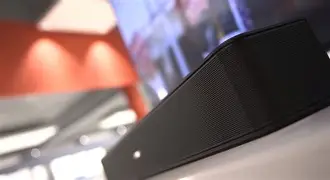
Daily Life Observations
One thing that bothered me over time was the lack of a visual display. The Solo 5 uses two small LED indicators that change color to show you what mode you are in. For example, the light turns amber when dialogue mode is active and green when you are adjusting the bass. In 2026, when almost everything has an OLED readout or an on-screen overlay, this feels incredibly archaic. I often found myself squinting at the bar from across the room to see if I had actually pressed the button or if the remote battery was dying.
However, I also appreciated the "Auto-Wake" feature. I have the Solo 5 connected to my TV's optical port, and whenever I turn on the television, the soundbar detects the signal and powers itself on automatically. This reliability is something I’ve missed in some of the more "smart" soundbars I've tested, which often suffer from software glitches or Handshake issues over HDMI. The Solo 5 is "dumb" in the best way possible—it does one job, and it does it every single time without fail.
Another specific disappointment a real owner would notice is the remote’s reliance on line-of-sight. Modern Bluetooth remotes don't care if you're pointing them at the floor, but the Solo 5 is old-school IR. If I have a coffee mug sitting in the wrong spot on my table, it blocks the signal. It’s a small thing, but after several months, those little frictions add up.
Conclusion
So, is the Solo 5 still "good" in 2026? My honest finding is: yes, but with major caveats. It is a relic of a time when "better sound" meant "clearer sound," rather than "more immersive sound." For many people, that is exactly what they need. It dramatically outperforms built-in TV speakers, which have only gotten thinner and tinier as TV bezels have disappeared.
In my experience, the Bose Solo 5 remains a champion of utility. It’s not trying to be the center of your home theater; it just wants to make sure you can hear what the actors are saying without having to turn the captions on. If you can find one at a reasonable price on the used market and you understand that you are trading "thump" for "clarity," it is a purchase that still makes sense today. It occupies a space on my shelf because it solves my specific problem of space and dialogue intelligibility, proving that in the world of electronics, newer isn’t always better—it’s just different.